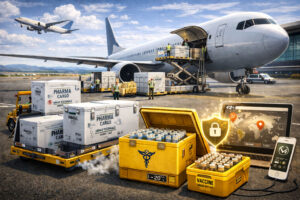

10 Ways Passive Packaging Protects Medicines in Transit
The safe delivery of medicines is just as critical as their development. Whether it’s life-saving vaccines, delicate biologics, or temperature-sensitive insulin, patients rely on pharmaceutical products arriving in perfect condition. That’s where packaging comes in—not as a box or container, but as the first line of defense against environmental risks.
Among the many solutions available, passive packaging for pharma has become a trusted method for ensuring that medicines remain safe, effective, and compliant during transit. Unlike active systems, which rely on electricity or mechanical refrigeration, passive systems use advanced insulation materials, phase change materials (PCMs), and engineered design to maintain stable temperatures throughout the journey.
But how does passive packaging actually protect medicines in real-world conditions? That’s what we are going to unveil in this article, so read on.
#1 Reliable Temperature Control
Temperature excursions are one of the greatest risks in pharmaceutical logistics. Even a short deviation outside the required range can render medicines ineffective – or worse, unsafe for patients.
Passive temperature controlled packaging uses insulation and thermal stabilizers to hold products within their required range for extended periods, often 48 to 120 hours, without relying on external power. This makes it especially valuable for last-mile delivery, long-haul shipments, and regions with limited infrastructure.
#2 Protection from Environmental Stress
Medicines don’t just face heat or cold – they face humidity, pressure changes during air transport, and even rough handling at checkpoints. Passive packaging is engineered to withstand these challenges, using shock-absorbing materials and sealed designs that keep contents stable no matter the external environment.
This is particularly crucial for biologics and vaccines, which are highly sensitive to external conditions and cannot risk contamination.
#3 Cost-Effectiveness
While active solutions like refrigerated containers are effective, they are often costly and require complex logistics to operate. Passive cold chain packaging provides a more affordable yet highly reliable alternative. By eliminating the need for batteries, motors, or fuel, it reduces operational costs without compromising compliance.
For many pharmaceutical companies and healthcare providers, passive solutions strike the right balance between protection and budget.
#4 Flexibility Across Transport Modes
Pharmaceuticals travel by land, sea, and air, often moving between multiple carriers and warehouses before reaching their final destination. Passive packaging is versatile and compliant with international regulations, making it suitable for multimodal transport.
Whether shipping a small parcel of temperature-sensitive samples or large consignments of vaccines, passive packaging adapts easily across different shipping environments.
#5 Sustainability Benefits
Sustainability is no longer optional in logistics—it’s a necessity. Passive packaging solutions are increasingly designed with reusability and recyclability in mind. Many systems can be reused multiple times without losing performance, reducing waste and the environmental footprint of pharmaceutical logistics.
This not only aligns with corporate sustainability goals but also enhances a brand’s reputation as a responsible healthcare partner.
#6 Regulatory Compliance
Pharmaceutical shipments are heavily regulated, requiring adherence to Good Distribution Practice (GDP), IATA guidelines, and local authority requirements. Passive packaging is designed and validated to meet these strict standards.
By ensuring stable, compliant conditions during transit, passive systems reduce the risk of regulatory non-compliance, shipment rejections, and costly delays.
#7 Independence from Power Sources
In remote areas, developing regions, or during emergencies, electricity and infrastructure may not always be reliable. Passive packaging offers independence from external power sources, ensuring medicines remain protected even when transport routes or facilities lack cooling systems.
This makes it an indispensable tool for delivering essential treatments during humanitarian missions, vaccination campaigns, and disaster relief operations.
#8 Scalability for Different Needs
No two pharmaceutical shipments are alike. Some may require a small insulated box for lab samples, while others need pallet-size containers for bulk vaccine deliveries. Passive packaging comes in a wide range of formats, offering scalability for different volumes and temperature requirements.
This adaptability helps shippers optimize resources while maintaining the same high standard of product protection.
#9 Minimizing Human Error
Logistics chains often involve multiple touchpoints, from packaging at the warehouse to customs clearance and final delivery. With active systems, errors in setting up or monitoring equipment can compromise the shipment. Passive packaging reduces these risks by simplifying the process – no need for constant monitoring or manual adjustments.
Once validated and prepared, it performs consistently throughout the journey, giving shippers confidence that their medicines are safe.
#10 Enhancing Patient Safety
Ultimately, every measure taken in pharmaceutical logistics leads to one goal: patient safety. Passive packaging ensures that medicines arrive as intended – safe, potent, and effective. This means patients and healthcare providers can rely on the integrity of every dose, no matter where in the world it’s delivered.
By bridging the gap between complex science and real-world delivery, passive packaging plays a critical role in saving lives.
Passive Packaging vs. Active Packaging: Which is the Right Choice?
While passive packaging for pharma has many advantages, it’s important to recognize when it’s the right fit. Passive solutions are best for short to medium-duration shipments, small to medium volumes, and lanes with predictable transit times.
Active packaging, with its mechanical cooling and monitoring systems, may be more suitable for ultra-long-haul shipments, extremely large consignments, or situations where constant temperature visibility is essential.
The most effective supply chains often use a mix of both, with logistics partners helping companies determine the best fit for each shipment.
Why Partner with Experts Like TFI
Managing pharmaceutical logistics calls for more than packaging – it requires expertise, regulatory compliance, and precision at every stage. As a GDP-compliant and ISO-certified logistics provider, TFI ensures that every shipment is handled with safety, quality, and compliance at the forefront.
Apart from passive cold chain packaging, TFI offers:
- End-to-end cold chain management
- Customs clearance and regulatory support
- Real-time monitoring and data logging
- Secure transportation for pharma
- Specialized packaging solutions
With years of experience in pharmaceutical logistics, TFI combines advanced technology with human expertise to ensure medicines arrive on time, in perfect condition, and ready to serve patients who need them most.
To Wrap Things Up
Medicines are more than products—they are lifelines. Ensuring their integrity during transit is a responsibility the pharmaceutical industry cannot afford to overlook. Passive packaging for pharma is one of the most effective and reliable ways to protect these lifelines, offering cost-efficiency, compliance, and patient safety in one solution.
For pharma companies seeking trusted partners in logistics, TFI delivers more than just transportation—we deliver peace of mind. With passive temperature controlled packaging, GDP compliance expertise, 30+ years’ global freight forwarding experience, validated fleet of pharma-dedicated vehicles, and a deep commitment to patient safety, we help you navigate the complexities of pharma logistics with confidence.