
The Role of Data Logging and Real-Time Monitoring in Cold Chain Integrity
In today’s interconnected world, life-saving medicines, vaccines, and other temperature-sensitive products often travel thousands of miles before reaching the people who need them most. From the moment these goods leave a manufacturer’s facility to the time they arrive at a hospital, pharmacy, or clinic, one factor remains critical: cold chain integrity.
Maintaining the right temperature throughout the supply chain isn’t just a matter of efficiency—it’s about safeguarding product quality, ensuring patient safety, and protecting the trust between pharmaceutical companies, healthcare providers, and the communities they serve. At the heart of this effort are two powerful technologies: data logging and real-time monitoring. Together, they provide visibility, accountability, and control in an increasingly complex logistics environment.
Why Cold Chain Integrity Matters
Maintaining cold chain integrity is vital for the safe transport of vaccines, biologics, insulin, blood products, and temperature-sensitive foods. A temperature excursion-whether too hot or too cold-can compromise the effectiveness of these products. For example, a vaccine exposed to temperatures outside its prescribed range may lose potency, putting patients at risk and causing significant financial losses.
In integrated cold chain logistics, every stakeholder – manufacturers, freight forwarders, warehouse operators, and last-mile distributors – relies on accurate data to ensure that products remain viable. Without robust monitoring, it becomes nearly impossible to guarantee that sensitive shipments have been handled properly along every step of the journey.
The Role of Data Loggers
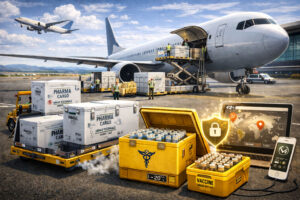
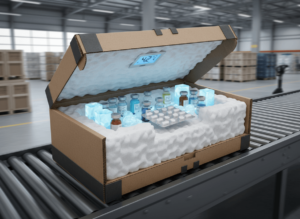
Data loggers are small devices placed inside shipments to record temperature, humidity, and other environmental conditions over time. They are the “black box” of cold chain transport, silently capturing information that tells the story of how a product was handled.
Key Benefits:
1
Post-Trip Validation – Once a shipment arrives, data from the logger can confirm whether the product remained within safe limits. This establishes a record that safeguards both the logistics provider and the manufacturer.
2
Accountability – If there was a temperature excursion, data logs help identify where and when it occurred, making it easier to pinpoint the cause.
3
Regulatory Compliance – Many health authorities require detailed records of cold chain conditions. Data loggers help companies demonstrate adherence to global standards such as GDP (Good Distribution Practice).
While data loggers are invaluable, their limitation is clear: they often provide information only after the journey is complete. By the time a problem is discovered, the damage may already be done.
The Advantages of Real-Time Monitoring
Immediate Alerts
If a shipment is exposed to unsafe temperatures, the system can send instant notifications to logistics managers, allowing them to intervene before it’s too late.
Location Tracking
Knowing where a shipment is at any moment helps prevent delays and reduces the risk of theft or mishandling.
Predictive Insights
Advanced analytics can forecast potential risks, such as high ambient temperatures along a route, enabling proactive planning.
Customer Confidence
Providing real-time updates to clients not only ensures transparency but also builds trust in the logistics provider’s ability to safeguard valuable products.
By combining continuous monitoring with smart data platforms, logistics teams move from a reactive approach to a proactive one – ensuring cold chain integrity is not just checked but actively maintained.
The Human Impact of Monitoring Cold Chains
When we talk about cold chain integrity, it’s easy to get lost in the technicalities of devices and data. But at its core, this is about people. A child in a rural community receiving a vaccine, a patient with diabetes depending on insulin, or a hospital in need of life-saving biologics-all of them rely on a secure cold chain.
Imagine a scenario where a shipment of vaccines is delayed at an airport in the summer heat. Without real-time monitoring, the risk might only be discovered after the doses have spoiled, resulting in wasted resources and delayed immunizations. But with monitoring tools in place, an alert could prompt immediate action-rerouting the shipment, replenishing ice packs, or moving the cargo into a cold storage facility. That intervention could mean the difference between compromised products and safe, effective medicines reaching those in need.
Integrating Data Logging and Real-Time Monitoring
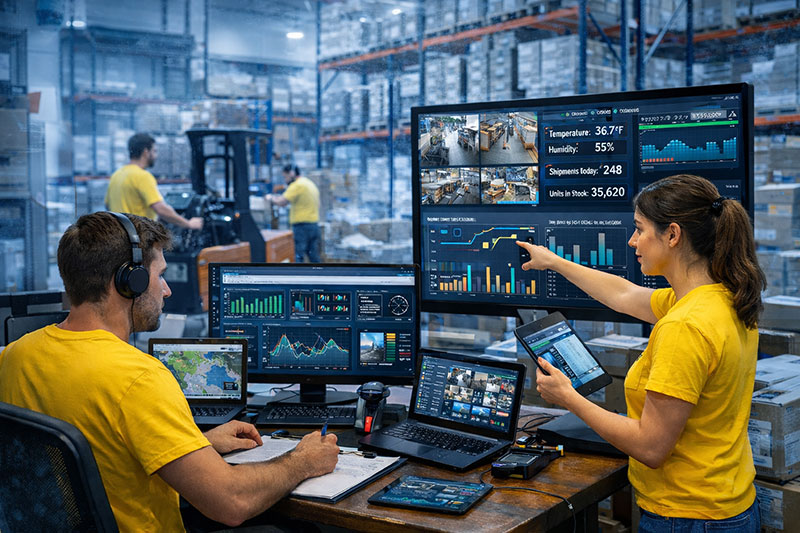
While real-time monitoring is often seen as the more advanced solution, the reality is that integrated cold chain logistics benefits from combining both approaches. Data loggers provide a permanent record for audits and regulatory requirements, while real-time systems ensure active intervention during transit.
When these technologies work together:
- Manufacturers gain peace of mind knowing that shipments can be verified and validated.
- Logistics providers can demonstrate accountability and compliance.
- Patients ultimately benefit from receiving safe, effective products.
Challenges and Considerations
Adopting data logging and real-time monitoring isn’t without hurdles.
Cost
Real-time systems are more expensive than traditional data loggers, which can be a barrier for smaller shipments.
Connectivity
Global shipments often pass through regions with limited network coverage, which can affect real-time tracking.
Data Management
Collecting information is only valuable if it is analyzed and acted upon. Companies need trained staff and robust systems to make sense of the data.
Despite these challenges, the benefits outweigh the risks. Many logistics providers are already investing in digital transformation to enhance visibility across their supply chains.
The Future of Cold Chain Monitoring
As technology evolves, we can expect even greater integration and sophistication. Artificial intelligence and machine learning will allow predictive models to anticipate risks before they occur. Blockchain may offer enhanced transparency by providing immutable records of shipment conditions. And as costs fall, even smaller healthcare providers and distributors will gain access to advanced monitoring solutions.
Ultimately, the future of cold chain integrity lies in a combination of innovation, collaboration, and accountability. Logistics providers, manufacturers, regulators, and healthcare professionals must work together to ensure that patients always receive safe, effective products.
Partner with TFI for Your Pharma Cold Chain Management Needs
Choose TFI as your partner in integrated cold chain logistics – because when it comes to healthcare, every shipment matters, and every patient counts.